FIRE welcomes its first Visiting Fellow to strengthen global collaboration in register-based research
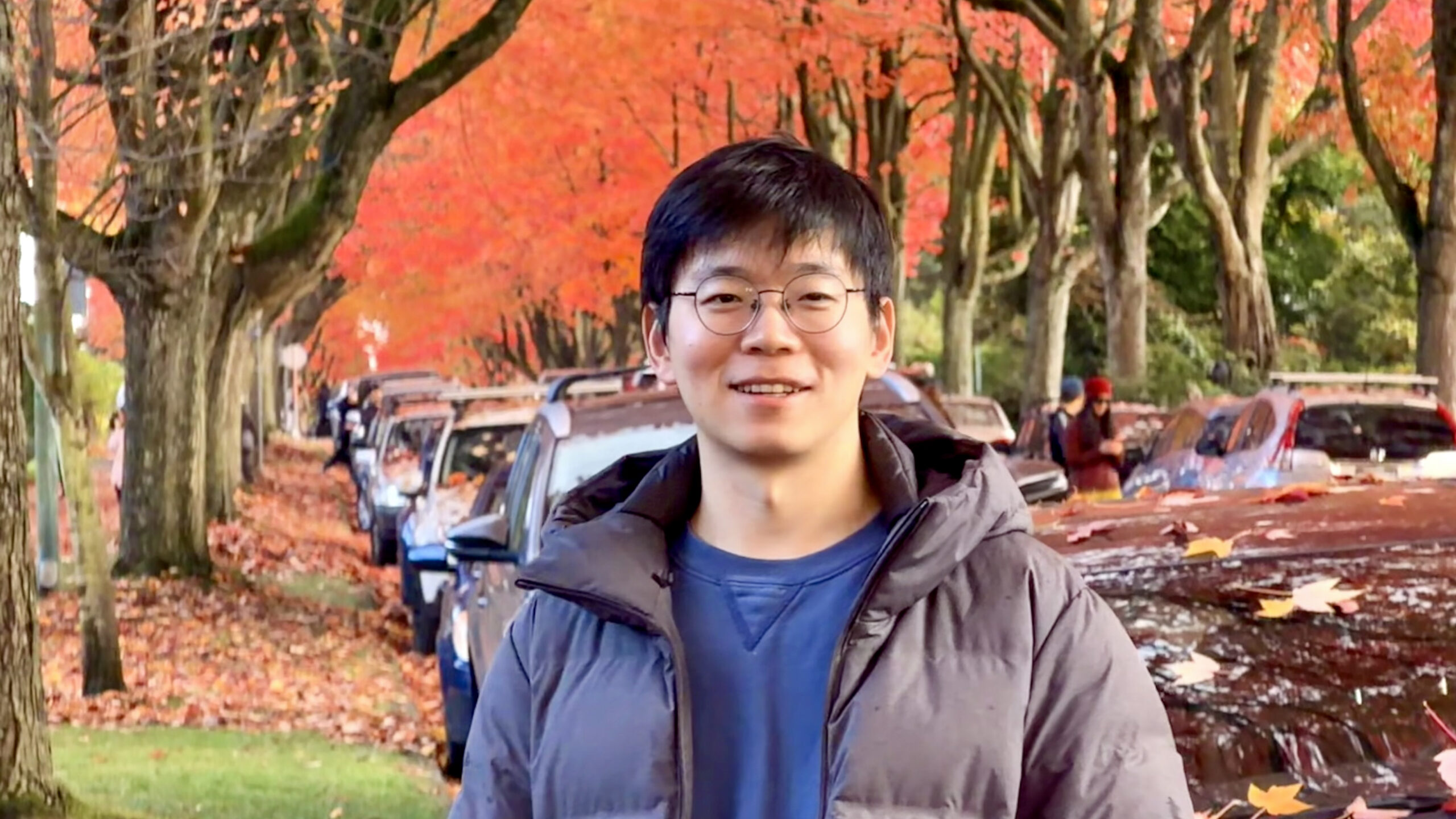
The Finnish Infrastructure for Register-Based Research (FIRE) has launched its Visiting Fellow programme, inviting leading international scholars to collaborate with Finnish researchers and explore Finland’s unique register data. The first FIRE Visiting Fellow is postdoctoral researcher Qinglin Ouyang, who will start his visit at Aalto University on 28 March.
The FIRE Visiting Fellow programme aims to strengthen international collaboration in register-based research by bringing researchers to Finland to contribute new perspectives, methods, and networks. At the same time, it seeks to make Finland’s extensive register data more accessible to the global research community. This year, six visiting researchers will take part in the programme across FIRE’s host organisations.
Qinglin Ouyang is a postdoctoral researcher in finance at Stockholm Business School, Stockholm University, where he obtained his PhD in Summer 2025. He primarily works with large-scale (administrative) microdata and is interested in household finance, FinTech, behavioral finance, and labor finance. His aim is to uncover the heuristics and simple decision rules that shape seemingly complex household behaviors in various contexts.
“My impression has been that the research field of household finance has expanded beyond a purely financial context, calling for interdisciplinary perspectives, for instance, how health-related conditions and events might alter household’s financial decision-making”, Ouyang says.
“FIRE is an ideal solution to the new era’s research challenges”
He notes that we are currently facing more changes and unexpected events than ever before, making it crucial to see the bigger, interconnected picture.
“FIRE, as an integrated register-based data infrastructure, is an ideal solution to the new era’s research challenges, and I am excited to explore the FIRE and to exchange ideas with researchers both in and outside my area.”
He especially looks forward to collaborating closely with his host, Professor Elias Rantapuska, and working on important research questions related to the balance sheet of Finnish households.
“I also appreciate the possibility to deepen the connection with the amazing colleagues at Aalto University – I have known some of them for a while, but this visit allows me to know more about their work and potentially to collaborate and to contribute to the field.”
Gaining first-time access to Finnish register data
The Visiting Fellow period also opens up totally new opportunities for Ouyang, as he has not previously had any first-hand experience using Finnish register data. However, he has worked with similar Swedish data.
“Because of some institutional constraints, Sweden’s specific register database related to household finance research is not up-to-date any more, and its granularity is also somewhat limited. Based on my understanding from journal articles that leveraged Finnish data in this particular field, I am convinced that the Finnish data would be significantly more helpful in my research agenda.”
Ouyang believes that this is exactly the time when a highly integrated data infrastructure is needed. Individuals nowadays have to deal with all kinds of shocks much more frequently than ever, not to mention the potential challenges brought by the rapid development of AI.
“We might witness a fundamental shift of human society in the coming years. To prepare for that shift, it’s absolutely crucial to connect as many dots as possible in one’s daily life so that we could obtain a more holistic view.”
In general, he sees register-based research as a necessary starting point for understanding individual behavior, and subsequently, it provides microfoundations to predict where society might be heading.
“I would be excited to see researchers from different areas working together, now that they can have a common ground of data, to answer previously overlooked yet important questions related to environment, health, equality and even philosophy. It would also be greatly beneficial if the FIRE could facilitate connection to other data sources, such as experiments and questionnaire surveys, which could surely expand research possibility even further.”